Why Sevierville Plumbers Are Invisible When Homeowners Ask AI Who to Call — and the AEO System That Gets Them Recommended First
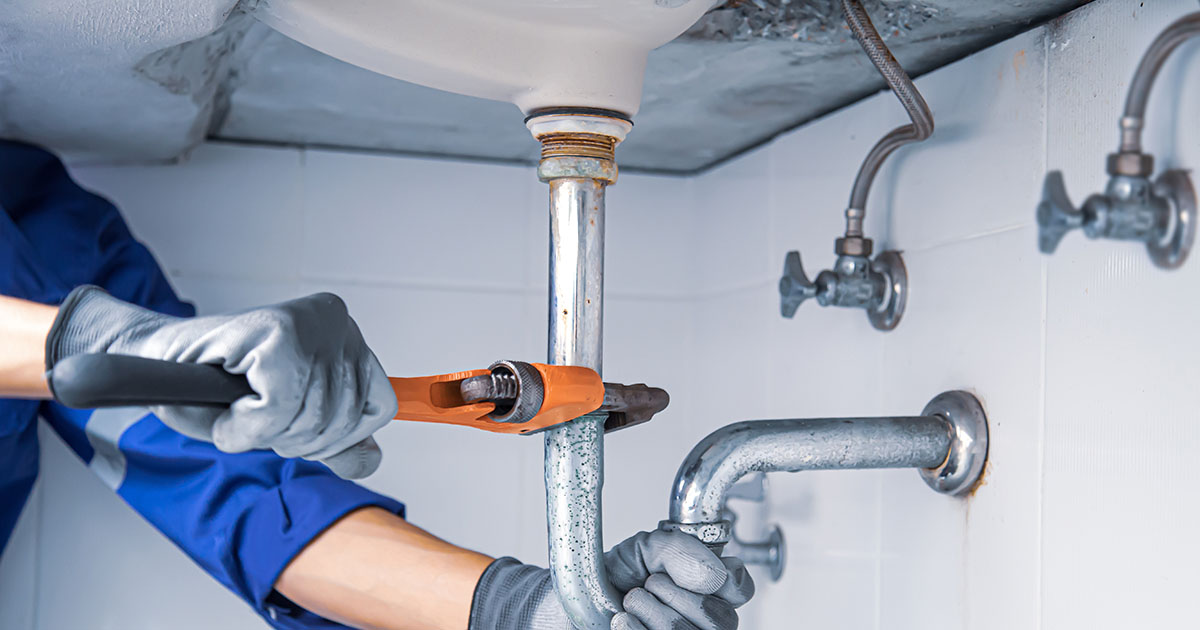
It’s a Saturday night in Sevierville. A homeowner off Dolly Parton Parkway hears water running behind a wall, finds the shutoff, and does what more than half of American adults now do before they open the phone app: they ask an AI. “Who’s the best emergency plumber near me in Sevierville?” ChatGPT names three companies. Google’s AI Overview summarizes two more with star ratings. Gemini rattles off a shortlist. If your shop isn’t in any of those answers, you didn’t lose the job on price or on reviews. You lost it before the homeowner ever saw a list — because the machine that now sits between you and the customer has never heard of you.
The fix isn’t more Google Ads or another five-star review. It’s Answer Engine Optimization (AEO): structuring your business’s information so AI systems can find it, trust it, and repeat it — verbatim — when a Sevierville homeowner asks who to call. The plumbers winning the 2 a.m. emergency call in 2026 aren’t the ones with the biggest ad budget. They’re the ones the AI already knows how to describe.
Why AI search broke the old plumbing-marketing playbook
For fifteen years, local search had one shape: rank in Google’s ten blue links, fight your way into the three-spot Map Pack, and buy ads above it. Everyone in the trades learned that game. Then, in 2024, Google began rolling AI Overviews into results across the country, and ChatGPT crossed into the hundreds of millions of weekly users. The interface changed underneath everyone’s feet.
Here’s what changed for a plumber. In the old model, a searcher saw a page of options and chose one — the homeowner did the comparing. In the new model, the AI does the comparing and hands back a short, confident answer, often two or three names, sometimes one. There is no page two. As practitioners like Rand Fishkin have documented, a growing share of searches now end without a single click to any website; the answer is delivered inside the search experience itself. If you are not one of the names the model surfaces, the customer never learns you exist — and no amount of on-site conversion tuning saves a job that was decided before your site ever loaded.
The uncomfortable part: AI systems don’t rank you the way Google’s classic algorithm did. They synthesize an answer from whatever they can find and trust about you across the open web. If the web is quiet about your company — thin website, inconsistent business details, no reviews the model can read, no structured data telling it what you do and where — the model does the sensible thing. It names a competitor it can describe with confidence.
How an AI actually decides which plumber to name
Large language models don’t “visit” Sevierville. They assemble a picture of your business from patterns in text: your website copy, your Google Business Profile, directory listings, review sites, local news, and any place your name, service, and city appear together. Three things move the needle, and they map cleanly onto how AEO works.
Consistency and corroboration. The model trusts what it sees repeated across independent sources. If your name, address, phone number, and service area match exactly on your site, your Google Business Profile, Yelp, Angi, the BBB, and a chamber-of-commerce page, the AI treats that as a settled fact. If your phone number is different in three places, it hedges — and hedging usually means omission.
Entity clarity. AI systems think in entities: a plumber, in Sevierville, that does emergency work, water heaters, and repipes. The clearer you make those associations in plain language on your site — not buried in a stock “Services” grid, but written out the way a person asks — the easier it is for a model to connect your company to the exact question a homeowner typed.
Machine-readable proof. This is where most contractors leave money on the table. Schema.org structured data (the LocalBusiness and Plumber markup) tells search engines and AI crawlers, in a format they parse perfectly, exactly what your business is, where it operates, its hours, its services, and its rating. Google’s own documentation recommends it. Most Sevierville plumbing sites don’t have it — adding it is one of the highest-leverage, lowest-cost moves in local AEO.
The AEO system that gets a Sevierville plumber recommended
You don’t need a bigger budget. You need your information to be unmissable and unambiguous to a machine. Here is the sequence that works, in priority order.
1. Lock down your entity, everywhere. Pick one exact business name, one phone number, one address format, and one service-area definition, and make every listing agree — website footer, Google Business Profile, Bing Places, Apple Business Connect, Yelp, Angi, and the local directories. Inconsistency is the single most common reason a real, competent plumber gets skipped by AI. This is unglamorous and it is the foundation.
2. Write the answers, not just the services. Following Donald Miller’s StoryBrand principle, position the customer as the hero and your company as the guide with a plan. Then, in plain language, put the actual questions on your site with clear answers: “How fast can you get to a burst pipe in Sevierville?” “What does a water-heater replacement cost here?” “Do you handle cabin and rental-property plumbing near Pigeon Forge?” AI systems pull from content that reads like a direct answer, because that’s the shape of the response they’re trying to generate.
3. Add LocalBusiness and FAQ schema. Mark up your business details and FAQ answers with structured data — the part a homeowner never sees and a machine reads first. It’s the difference between the AI guessing about you and the AI quoting you.
4. Feed the model fresh, local proof. Reviews still matter, but for AEO their job is different: they give the model recent, specific, machine-readable evidence that you exist and deliver. A steady flow of Google reviews that mention the service and the city (“same-day water heater in Sevierville”) does double duty — it builds trust with humans and hands the AI exact phrases to repeat.
5. Earn a few credible mentions. A listing in the Sevierville Chamber of Commerce, a sponsorship page, a mention in local coverage, a profile on a trade association — these are the corroborating sources that turn an AI’s “I’m not sure” into a confident recommendation. This is E-E-A-T (Experience, Expertise, Authoritativeness, Trustworthiness) — the framework from Google’s Search Quality Rater Guidelines — applied to a home-services business.
Done together, these compound. Marty Neumeier’s branding work makes the same point: the goal is to be the obvious choice, not merely an available one. In AI search, “obvious” has a literal meaning — the option the model can describe without hesitating.
What it costs you to wait
The plumbers who move first get a durable edge, because AI systems favor the sources they already trust. Once a model has learned to describe a Sevierville plumber confidently, that company gets named again and again while later movers fight to be noticed. It’s the same first-mover dynamic that made the Google Map Pack so hard to break into — except AEO is earlier in its curve, so the window to become the default answer is open right now and narrowing. Every month you’re invisible to the machine is a month a competitor is becoming its default recommendation.
Frequently asked questions
What is Answer Engine Optimization (AEO) for plumbers?
AEO is the practice of structuring your business’s online information so AI systems — ChatGPT, Gemini, Google’s AI Overviews, and others — can find it, trust it, and recommend you when someone asks for a plumber. Where traditional SEO aims to rank a webpage, AEO aims to make your company the answer the AI gives. For a Sevierville plumber, that means consistent business listings, plain-language answers to real homeowner questions, and structured data that machines can read.
How is AEO different from the SEO my plumbing company already pays for?
Classic SEO gets you into a list of links that a person then browses. AEO gets you into the short, synthesized answer the AI hands back before any list appears. They overlap — strong SEO fundamentals help both — but AEO adds a layer: structured data, entity consistency, and answer-shaped content designed for machine synthesis rather than human browsing. Many plumbers with decent SEO are still invisible in AI search because they never did that second layer.
Do AI systems actually send plumbing customers, or is this hype?
They send customers indirectly and increasingly directly. A large and growing share of searches now end inside the AI answer without a click to any website, which means the recommendation itself is the moment of choice. When a homeowner asks an AI who to call and then dials the first name it gives, that customer never touched your website — the AI was the referral. Being one of the named options is now a demand-gen channel, not a novelty.
Will more Google reviews get my Sevierville plumbing company into AI answers?
Reviews help, but they aren’t sufficient on their own. AI systems weigh reviews as one signal among several: entity consistency, structured data, corroborating mentions, and clear on-site content all matter. A shop with 200 reviews but an inconsistent name and no schema can still be skipped, while a smaller shop that’s clean and well-structured gets named. Reviews are most powerful when they feed the model specific, local, service-level phrases it can repeat.
How long does it take to show up in AI search after fixing this?
Listing consistency and structured data can be corrected in days, and search engines re-crawl the changes over the following weeks. AI systems update on their own cadences — some reflect the live web quickly, others lag. Expect early movement in weeks and compounding gains over a few months as more sources corroborate your information. Start now, because the advantage accrues to whoever the model learns to trust first.
Ready to stop being invisible?
If a homeowner in Sevierville asked an AI for a plumber today, would your company be named? Most local shops don’t know — and the ones that find out first are the ones that fix it first. Forty-Second Street builds AI-search visibility for East Tennessee home-services contractors, from entity cleanup and schema to the review systems that make you the obvious answer.
Keep reading
See where you stand: get a free AI visibility audit and find out whether local homeowners can find you in Google and AI search.
NiceJob: Helps Sevierville plumbers ask every customer for a review after the job.
Vida: Answers plumbing calls, texts and chats day and night, so no lead goes to voicemail.