Why Farragut Roofing Companies Don’t Get Recommended When Homeowners Ask AI Who to Call
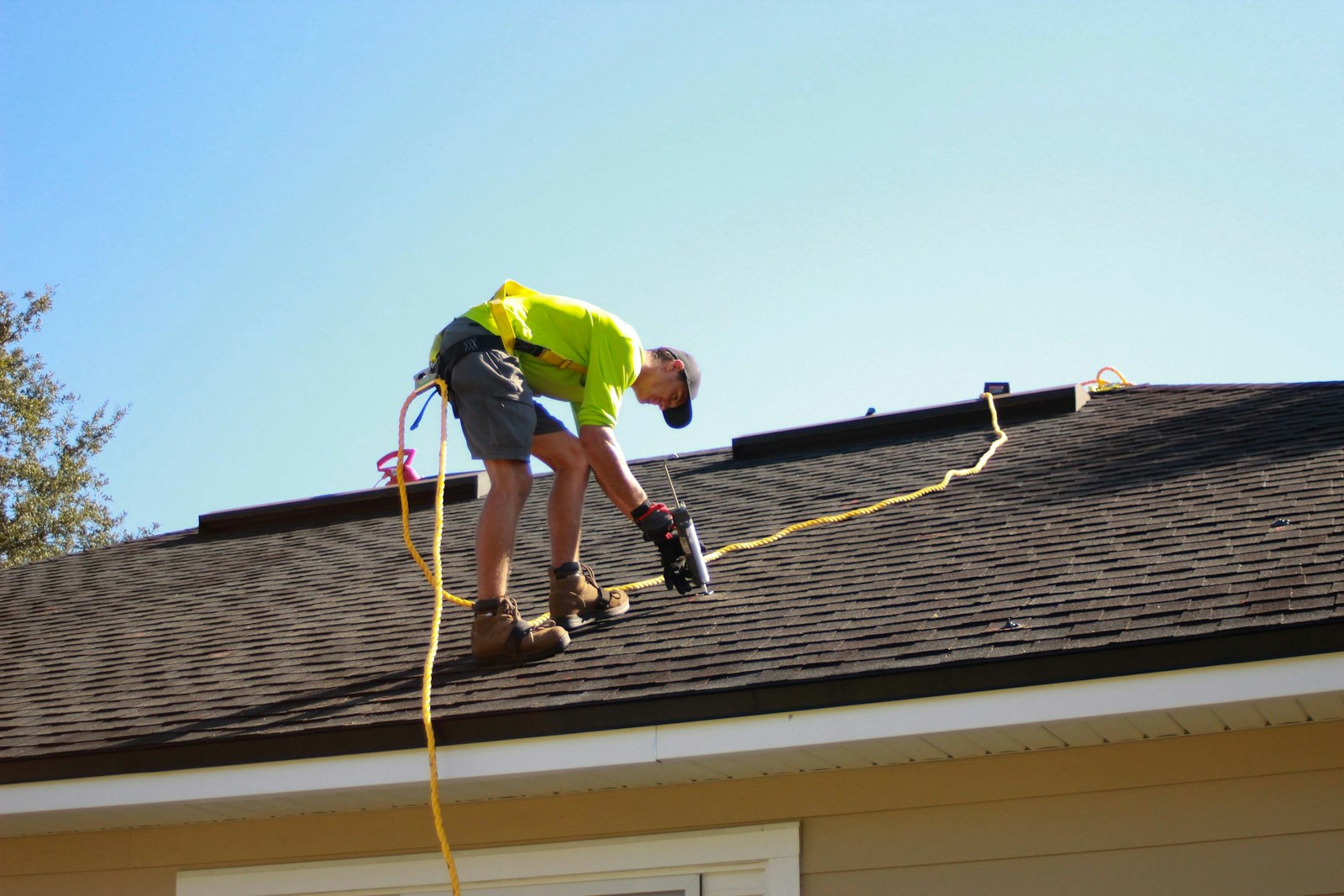
A hailstorm rolls through Farragut on a Thursday afternoon. By Friday morning, a homeowner off Kingston Pike is standing in her driveway looking at dented gutters and a few loose shingles. She doesn’t open the phone book. She doesn’t even open Google the old way. She opens ChatGPT and types, “Who are the best roofing companies near Farragut, TN for hail damage?” Three seconds later she has a short list of three contractors, each with a sentence on why it’s trusted. If your roofing company isn’t on that list, you were never in the running — and you’ll never even know the call happened.
Short answer: Farragut roofing companies stay invisible in AI search because tools like ChatGPT and Google’s AI Overviews build recommendations from consistent, corroborated, third-party data about your business — and most roofers never deliberately built it. The fix is Answer Engine Optimization (AEO): becoming the clearest, best-verified, easiest-to-cite roofer in your service area.
The rest of this guide breaks down exactly how answer engines pick who to name, and the 60-day sequence a Farragut roofer can run to become one of those names.
Key takeaways
- AI assistants return a few recommended businesses, not ten blue links — you are either cited in the answer or invisible.
- Answer engines choose who to name based on four signals: entity clarity, corroboration, E-E-A-T, and local specificity.
- A complete Google Business Profile and a steady flow of specific reviews are the highest-leverage signals you control.
- A focused local roofer can out-signal a national franchise, because specificity and consistency beat ad budget in AI search.
Why don’t Farragut roofing companies show up in AI search?
For fifteen years, local search meant one thing: rank your website and Google Business Profile in the map pack so a homeowner scrolling results would click you. That game still matters, but a second game now runs alongside it. When someone asks an AI assistant a question, they don’t get ten links to evaluate — they get an answer. Often a single recommendation, or a curated three. There is no page two, and there is no scrolling. You are either named in the answer or you don’t exist.
The mechanics dictate the fix. Large language models don’t visit your website in real time the way a person does. They generate answers from patterns learned across the open web plus, increasingly, live retrieval from sources they trust — your Google Business Profile, review platforms, directories, local news, and structured data on your own site. When those sources agree on who you are, what you do, and where you do it, the model gains confidence and cites you. When they conflict, or say nothing, it reaches for a competitor it can describe cleanly. Silence and inconsistency are the two things that get you skipped — and this is the same visibility problem now hitting every home-services trade across Blount County and East Tennessee.
What is Answer Engine Optimization (AEO)?
Answer Engine Optimization (AEO) is the practice of structuring your business data and content so AI answer engines — ChatGPT, Google’s AI Overviews, Perplexity, and Gemini — can confidently identify, trust, and cite your company inside a generated answer. Where traditional SEO earns you a ranked link a person still has to click, AEO earns the recommendation itself. The two share a foundation, but they optimize for different finish lines.
| Traditional SEO | Answer Engine Optimization (AEO) | |
|---|---|---|
| Goal | Rank in a list of links | Be named inside the AI answer |
| Where it shows | Google results page and map pack | ChatGPT, AI Overviews, Perplexity, Gemini |
| Wins on | Keywords, backlinks, on-page signals | Entity clarity, corroboration, structured data, reviews |
| Homeowner sees | Ten options to compare | One to three vetted recommendations |
| Your payoff | A click | The recommendation itself |
You don’t choose one or the other. The foundation that wins AI citations also strengthens classic rankings, which is why the smartest East Tennessee contractors treat AEO as an upgrade to their SEO, not a replacement. For the deeper mechanics, see our complete guide to winning AI search with AEO and GEO.
The 4 signals AI uses to decide who to recommend
Answer engines aren’t magic, and they aren’t random. Research on how generative engines choose sources — most notably the 2024 “GEO: Generative Engine Optimization” study from Princeton, Georgia Tech, and Allen Institute researchers — found that content carrying clear citations, quotable statements, and statistics lifted its visibility in AI-generated answers by as much as roughly 40 percent versus generic marketing copy. Translate that into a roofing company’s world and four practical signals do the heavy lifting.
- Entity clarity. The model needs to understand you as a distinct entity: a roofing contractor, in Farragut, Tennessee, that handles hail and storm repair. That clarity comes from a consistent name, address, and phone number (NAP) across every platform, a complete Google Business Profile with the correct primary category, and structured data (Schema.org LocalBusiness and RoofingContractor markup) on your site that spells it out in machine-readable terms.
- Corroboration. One page calling you great means nothing. Twenty independent sources describing you consistently — your Google Business Profile, Angi, the BBB, Nextdoor, a Knox News mention, dozens of reviews using the words “Farragut” and “roof replacement” — build the corroboration a model needs to name you with confidence.
- Experience and expertise (E-E-A-T). Google’s own quality framework — Experience, Expertise, Authoritativeness, Trustworthiness — is a strong proxy for what AI systems reward. For a roofer that means real project photos with locations, named certifications (GAF Master Elite, Owens Corning Preferred), a licensed-and-insured statement, and content that shows you’ve done the work, not just claimed it.
- Local specificity and freshness. A model answering a storm-damage question wants a source that clearly covers hail damage in East Tennessee, not a generic “we do roofs” homepage. Specific, current, locally-anchored content wins the citation.
The 60-day AEO game plan for a Farragut roofer
You don’t fix this with a single blog post. You fix it by systematically feeding every signal above, in order. Here’s the sequence that moves the needle fastest.
- Weeks 1–2 — Lock the foundation. Audit your NAP across the top 20 directories and make it identical everywhere. Fully complete your Google Business Profile — correct primary category (Roofing Contractor), service areas that name Farragut, Concord, and West Knoxville, services listed individually, and 15–20 real photos. Add LocalBusiness and RoofingContractor schema to your site. This is unglamorous plumbing, and it’s the single highest-leverage work you’ll do.
- Weeks 3–5 — Build corroboration and reviews. Reviews are the strongest third-party signal a local business controls, and answer engines read them. Put a review system in place that asks every satisfied customer within 24 hours of finishing the job, and coach them to name the neighborhood and the service (“full roof replacement in Farragut after the June hailstorm”). Those exact phrases are what a model matches against a homeowner’s specific question.
- Weeks 6–8 — Publish citable content. Create service and location pages and helpful articles that answer the real questions homeowners ask — “How do I know if my Farragut roof has hail damage?”, “Does insurance cover roof replacement in Tennessee?” Write them with clear headings, a direct answer up top, statistics, and a genuine FAQ. This is the content models quote. Structure it so a machine can lift a clean, correct sentence about your expertise straight into its answer.
What getting cited is actually worth
Roofing is a high-ticket, low-frequency purchase — a single replacement in an affluent zip code like Farragut’s 37934 can run well into five figures. You don’t need a hundred AI-driven leads a month. You need to be one of the three names the machine hands to a homeowner who just watched a hailstorm chew up a roof she was already thinking about replacing. Being in that consideration set, at the moment of highest intent, before she has called anyone else, is worth more than almost any other marketing move available to you. The contractors who build these signals now will own that answer for years, because corroboration compounds. The ones who wait will spend those years wondering why the phone rings less even though their trucks look the same.
Frequently asked questions
How is AEO different from regular SEO for my roofing company?
Traditional SEO optimizes so your pages rank in a list of links a person clicks. Answer Engine Optimization (AEO) optimizes so AI assistants like ChatGPT, Gemini, and Google’s AI Overviews name your company directly inside a generated answer. SEO wins you a click; AEO wins you the recommendation itself. They share a foundation — a strong site, accurate business data, real reviews — but AEO leans harder on structured data, third-party corroboration, and clearly citable, question-shaped content.
Can a small Farragut roofing company really compete with big regional franchises in AI search?
Yes, and often more easily than in paid advertising. Answer engines reward clarity and corroboration, not ad budget. A focused local roofer with consistent listings, a steady stream of specific Google reviews mentioning Farragut and West Knox neighborhoods, and clean structured data can be described by a model more confidently than a sprawling franchise with generic, region-wide messaging. Specificity is a small company’s advantage here.
How long does it take to show up in ChatGPT and Google AI Overviews?
Foundational fixes — business profile, listings, and schema — can be reflected in AI answers within a few weeks as models refresh their retrieved sources. The corroboration that makes you a confident, repeated recommendation — review volume, content depth, third-party mentions — builds over roughly two to four months. It is a compounding asset, not a switch you flip, which is exactly why starting before your competitors matters.
Do online reviews actually affect what AI recommends?
They matter a great deal. Reviews are one of the richest third-party signals a local business has, and answer engines draw on them to judge quality and relevance. Beyond the star rating, the words customers use — the neighborhood, the type of job, the outcome — help a model match your business to a homeowner’s specific question. A review that says “fast hail-damage roof replacement in Farragut” is far more useful to the machine than a generic “great service.”
Does my roofing website still matter if AI is answering the question?
More than ever. Your website is one of the primary sources answer engines retrieve, quote, and link when they build a recommendation. Clear service and location pages, question-shaped headings, direct answers, and LocalBusiness and RoofingContractor schema make your site easy for a model to read and cite. A vague, thin, or slow site gives the machine nothing safe to lift, so it moves on to a competitor whose site is clearer.
What’s the single most important first step?
Fix your Google Business Profile and make your name, address, and phone number identical across every directory. Inconsistent business data is the most common reason a model can’t confidently identify or place a contractor, and it’s the cheapest thing to correct. Nail that foundation before spending on anything more advanced — everything else builds on top of it.
Get in the answer before the storm hits
The homeowners who need a new roof in Farragut this year are already asking AI who to call. The only question is whether the machine knows your name well enough to say it. Building that visibility is deliberate, learnable work — and the contractors who start now will be the ones getting cited when the next hailstorm rolls through. Forty-Second Street builds these AI-search visibility systems for East Tennessee home-services contractors, from the business-profile foundation up through the citable content that gets you recommended.
Keep reading
See where you stand: get a free AI visibility audit and find out whether local homeowners can find you in Google and AI search.
NiceJob: Helps Farragut roofers ask each homeowner for a review after the job is done.
Vida: Answers roofing calls day and night, so the homeowner AI sent you is not lost.