

Why Knoxville Roofing Companies Are Invisible in ChatGPT and AI Search (and How to Get Cited First)
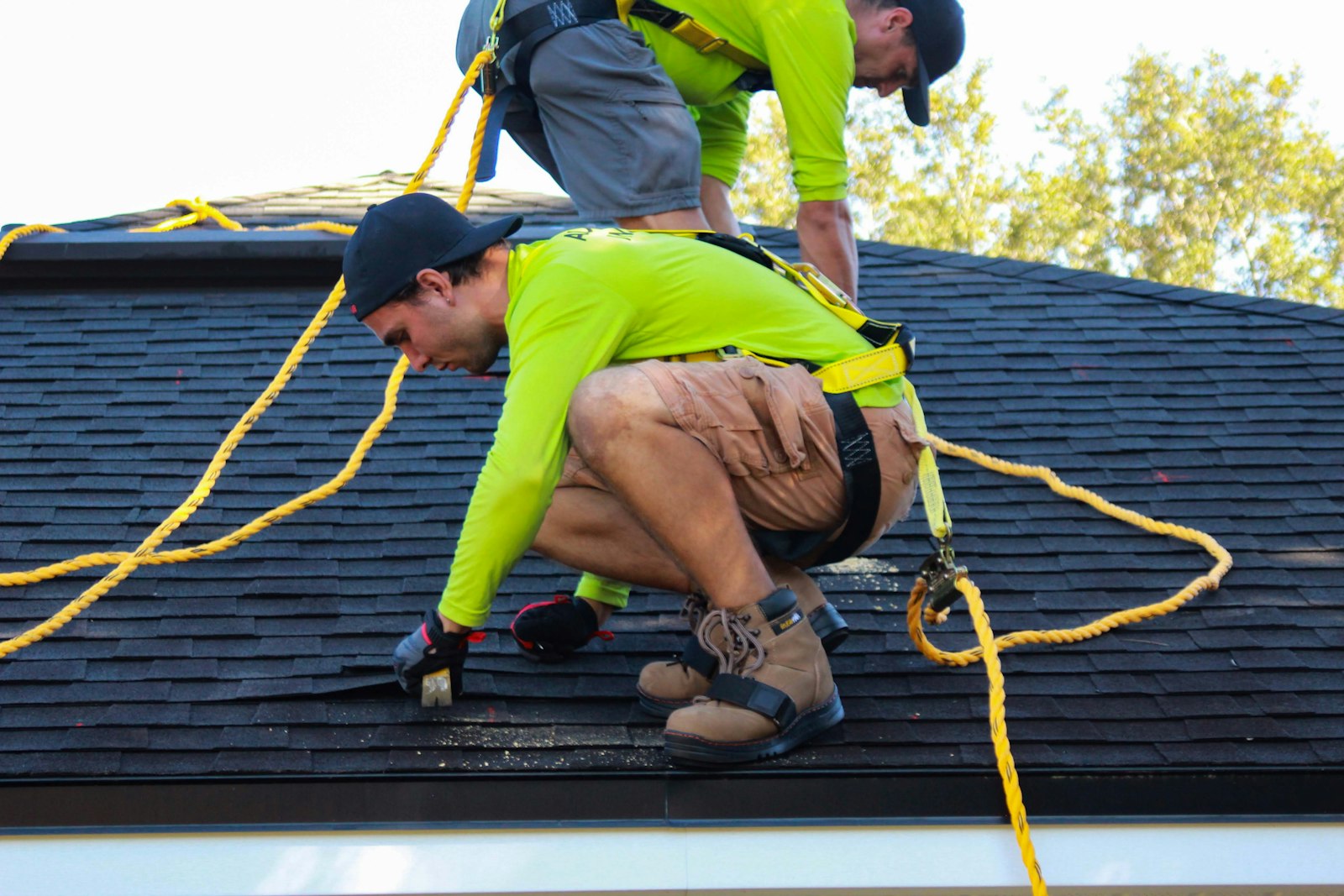
When a Knoxville homeowner with a leaking roof stops typing "roofers near me" into Google and instead asks ChatGPT "who is the best roofing company in Knoxville," the roofer that gets named wins a job you never even knew was up for grabs.
The Problem: Most Knoxville Roofing Companies Optimized for a Search Engine That Is Being Replaced
Here is what most Knoxville roofing owners get wrong. They spent years fighting for a blue link on page one of Google, and now the answer is arriving before the links do. Google puts an AI Overview at the top of the page, and homeowners increasingly skip Google entirely and ask ChatGPT, Perplexity, or Gemini to just tell them who to call. If your roofing company is not part of that answer, you are invisible at the exact moment the buying decision gets made.
The wrong model is treating AI search as a novelty that "the young people use." The right model is understanding that answer engines are becoming the front door to your Knoxville market, and that door has room for three names, not thirty. Al Ries, who co-wrote Positioning, spent his career on one truth: it is better to be first in the mind than better in the product. AI search is that principle weaponized. The model does not list every roofer in Knox County. It confidently names a handful, and the rest do not exist to the person asking.
Marty Neumeier, author of Zag, adds the other half: a language model cannot see that your crew does better flashing work than the company across town. It only repeats what the web tells it about you. If the web is quiet about your Knoxville roofing business, the AI is quiet too.
The Framework: The Three Signals AI Engines Use to Name a Knoxville Roofer
Getting cited in AI search is not luck, and it is not a black box. Language models answer local questions by pulling from the public signals that already exist about your business, then stitching them into a recommendation. Alex Hormozi, in $100M Leads, argues that leads come down to being seen by more of the right people in more places. AI visibility is that idea applied to a machine that reads the whole web before it answers. Three signals decide whether it names you.
Signal 1: A consistent, machine-readable identity
The AI has to be certain who you are before it will risk recommending you. That means your business name, address, phone number, and services must match everywhere they appear: your website, your Google Business Profile, Yelp, Facebook, and the trade directories. Add structured data to your site so a machine can read your service area and services without guessing. A Knoxville roofing company with clean, consistent data is a company the model trusts enough to name.
Signal 2: Third-party corroboration
Language models weight what others say about you far more heavily than what you say about yourself. Reviews, mentions on local news sites, listings in contractor directories, and citations across the web all tell the AI that your Knoxville roofing business is real, active, and well-regarded. Jay Abraham calls this earning the trusted-advisor position before the transaction. The AI is looking for that same third-party proof before it puts your name in a homeowner's hands.
Signal 3: Extractable, question-shaped content
AI engines quote content that directly answers a question. A page that plainly states "The average cost to replace a roof in Knoxville ranges from X to Y" is far more likely to be pulled into an answer than a wall of marketing copy about your family's three generations of service. Write the answers homeowners actually ask, in clear language a model can lift verbatim, and you become the source the AI cites.
The Evidence
The shift is not a prediction anymore; it is measured. Gartner forecast that traditional search engine volume would drop 25 percent by 2026 as AI chatbots and virtual agents absorb queries that used to go to Google. Even where the drop is slower than that headline, the direction is not in dispute: answers are moving off the links and into the summary.
The Pew Research Center quantified what that does to clicks. In a July 2025 study tracking real Google searches from March 2025, Pew found that 58 percent of users encountered at least one AI-generated summary that month. When an AI Overview appeared, only 8 percent of searches led to a click on a traditional result, compared with 15 percent when no summary was shown, and users clicked a source link inside the AI Overview just 1 percent of the time. The clicks a Knoxville roofer used to earn are quietly evaporating into the summary.
Meanwhile the audience for pure AI answers has exploded. OpenAI reported that ChatGPT reached hundreds of millions of weekly users through 2025, and Perplexity and Google's Gemini added tens of millions more. Homeowners are already asking these tools for contractor recommendations. The only question is whether the machine has enough clean, corroborated information to name your Knoxville roofing company when it does.
The roofer who gets cited by the AI is not paying for that answer. They built the web presence that earned it.
What To Do Right Now
- Test what the machines already say about Knoxville roofers this week. Open ChatGPT, Perplexity, and Google's AI results and ask "who are the best roofing companies in Knoxville, TN." Write down which companies get named and whether you are one of them. That list is your real competitive set, and it is the scoreboard you are playing against.
- Fix your name, address, and phone number everywhere it appears. Make the exact same information match on your website, Google Business Profile, Yelp, Facebook, and every directory. Inconsistent data makes the AI unsure who you are, and an unsure model leaves you out.
- Add structured data and a clear services-and-service-area page. Spell out, in plain text a machine can read, that you are a roofing contractor serving Knoxville and Knox County, and list every service. Do not bury it in an image or a slogan.
- Publish plain-answer content to the questions homeowners ask. Cost to replace a roof in Knoxville, signs you need a new roof, how long a roof lasts in East Tennessee weather. Write each answer so it stands on its own and a model can quote it.
- Keep earning reviews and local mentions every month. Third-party proof is the signal you least control and the AI trusts most, so build a steady drip of Google reviews and pursue mentions on local Knoxville sites and directories.
Who This Is For
This is for the owner of an established Knoxville roofing company doing roughly $1 million to $10 million a year, running multiple crews, who closes well once a homeowner is on the phone but is watching lead flow get less predictable. You serve Knoxville, Farragut, and the surrounding Knox County market, you do genuinely good work, and it bothers you that homeowners are asking a chatbot for a recommendation and hearing a competitor's name. If you are brand new with no reviews and no web presence yet, start with the fundamentals of a Google Business Profile first, then come back to this.
What Results to Expect
Be realistic, because AI visibility compounds rather than flips on. In the first 30 to 60 days after you fix your data consistency and publish clear, question-shaped content, expect the machines to start describing your Knoxville roofing business more accurately when asked. Over 90 days, as reviews and local mentions accumulate, expect to begin appearing in AI recommendations for your core services, alongside gains in traditional local search since the same signals feed both. This is not an overnight switch, and no honest agency can promise a specific ranking inside a model. What it reliably does is make you the roofer the AI can confidently name instead of the one it has never heard of.
Frequently Asked Questions
What is AI search visibility for a roofing company?
AI search visibility is how often and how accurately AI tools like ChatGPT, Perplexity, and Google's AI Overviews name and describe your business when someone asks for a recommendation. For a Knoxville roofing company, it determines whether the machine suggests you or a competitor when a homeowner asks who to hire. It is earned through consistent data, third-party proof, and clear content, not bought as an ad.
How is AI search different from regular Google SEO?
Traditional SEO aims to rank a page in a list of blue links a person then clicks. AI search aims to get your business named inside a single generated answer, often with no click at all. The signals overlap, but AI search puts extra weight on consistent business data and content a model can quote directly. Both matter, and the same foundational work improves each.
When did AI search start mattering for home services?
It became a real factor in 2024 and 2025, as Google rolled out AI Overviews and ChatGPT and Perplexity grew into mainstream tools. Pew Research found that by March 2025, most Google users were already encountering AI summaries. For Knoxville roofers, the window to get established as a cited source is now, before competitors lock in the recommendation.
Where do AI tools get the information they use to recommend a roofer?
They pull from the public web: your website, your Google Business Profile, review platforms, directories, and local news and blog mentions. The model synthesizes those sources into an answer. That is why consistent business data and steady third-party mentions matter so much, since they are the raw material the AI reads before it recommends anyone.
Why isn't my Knoxville roofing company showing up in ChatGPT answers?
Usually because the machine cannot find enough consistent, corroborated information to name you confidently. Mismatched name-address-phone data, thin website content, few reviews, or a lack of local mentions all make a model leave you out. The fix is to clean up your data, publish clear answers to common questions, and build steady third-party proof.
How do I get my roofing company cited by AI search tools?
Make your business identity consistent everywhere, add structured data to your website, publish plain-language answers to the questions homeowners ask, and earn a steady stream of reviews and local mentions. These are the same signals AI engines use to decide who to name. Do them consistently and you become a source the machine trusts.
How much does AI search optimization cost for a contractor?
Much of the foundational work, such as fixing your business data and writing clear service pages, costs time rather than money and can be done in-house. Ongoing content, review generation, and technical work are where most contractors hire an agency, typically for a monthly retainer that varies with competition. The return comes from capturing recommendations you are currently losing to competitors.
What if I optimize for AI search and the calls still do not come?
Then the bottleneck is usually one of three things: your business data is still inconsistent, your content does not directly answer what buyers ask, or you have too few reviews and mentions for the AI to trust you. Each is measurable and fixable. Audit against the competitors the AI actually names in Knoxville and the gap will show you where the problem is.
AI search versus Google Business Profile: which should a Knoxville roofer prioritize?
Start with your Google Business Profile, because it is free, it feeds the local pack, and its data also feeds AI answers. Then layer AI search work on top, since the two share the same foundation of consistent data and reviews. The strongest Knoxville roofing companies treat them as one connected visibility system rather than separate projects.
Is AI search visibility just a fad that will go away?
No. Gartner projected a 25 percent drop in traditional search volume by 2026 as AI answers absorb queries, and adoption of tools like ChatGPT has only accelerated. The specific tools will change, but homeowners asking a machine for a recommendation is a durable behavior. The roofers who build visibility now will own the answer as the behavior grows.
What is the biggest mistake Knoxville roofing companies make with AI search?
The biggest mistake is assuming their existing Google ranking automatically carries over, so they do nothing. AI answers rely on consistent data and quotable content that many contractor websites simply do not have, so a company that ranks on Google can still be invisible in ChatGPT. The fix is to build specifically for how machines read and cite, not to assume old SEO is enough.
Ready to Get More Calls in Knoxville?
If your Knoxville roofing company does excellent work but homeowners are asking ChatGPT and Google's AI who to hire and hearing someone else's name, the problem is not your roofs. It is that the machines making the recommendation do not have enough clean, corroborated information to name you, and every week that continues is another job quietly routed to a competitor.
Forty-Second Street builds AI search and local visibility systems for East Tennessee home services contractors, so the tools homeowners now trust name your roofing company and your phone rings with more booked jobs. Book a free visibility audit for your Knoxville roofing business at 42st.com and find out exactly what the machines say about you today.
Keep reading
See where you stand: get a free AI visibility audit and find out whether local homeowners can find you in Google and AI search.

