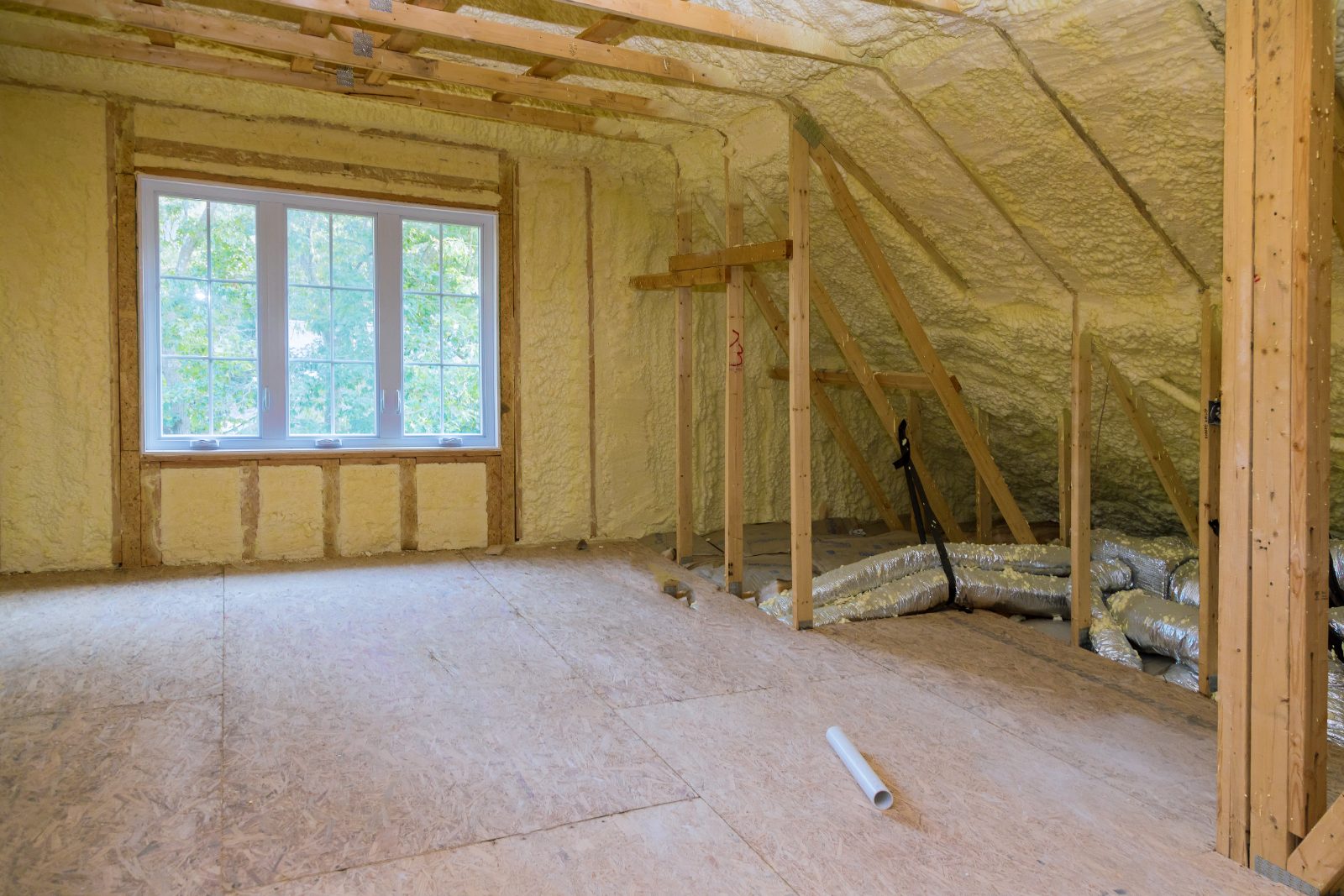
Insulation in East Tennessee is two businesses sharing a truck. One sells retrofit work to homeowners with a comfort or bill complaint in a house built decades ago. The other sells volume to builders who need attics and walls done on schedule. They use different words, buy on different criteria, and cannot be served by the same page. Most insulation companies build for one funnel and then wonder why the other never calls.
How homeowners search for insulation
Retrofit searches are symptom-first, not product-first. Homeowners type cold floors upstairs, why is my bonus room so hot, attic insulation cost, crawl space encapsulation. Most have no idea whether they need blown-in, batts or spray foam, which means the page that explains the difference earns the click and the call. Volume spikes in the first cold weeks after a heating bill lands, and again in midsummer. Traffic is mobile-heavy but never urgent; nobody calls at eleven at night about R-value. Homeowners contact two or three companies and take a week or more, usually because they are waiting on a second opinion or an energy audit. Builder demand looks nothing like this and largely does not happen on Google at all.
What makes insulation different
The retrofit ticket sits between a service call and a remodel — larger than a repair, small enough to fund without a loan, though financing helps on encapsulation and whole-house foam. It is one-time work with no service contract behind it, so referrals and neighborhood clustering carry more weight than lifetime value. The housing stock is the market: 43.2 percent of Knox County homes were built before 1980 and 19.5 percent before 1960, which is a deep pool of under-insulated attics, knee walls and vented Zone 4A crawlspaces built to no meaningful energy code. The new-construction side is a relationship business; Knox County permitted 5,013 housing units in 2025, and those jobs are awarded by builders and superintendents rather than by search. Utility rebate programs, when running, reshape the retrofit funnel entirely.
The seasonal pattern in East Tennessee
Two peaks, not one. The first arrives with January and February heating bills. East Tennessee records about 67 days a year at or below freezing, enough to make an under-insulated 1965 ranch genuinely uncomfortable, and calls cluster in the two weeks after the bill lands. The second comes in July and August, when humid Zone 4A summers drive heat and moisture into unconditioned attics and vented crawlspaces, and the complaint shifts from cold floors to a bonus room nobody can use. Spring and early fall are the trough. Those months are for crawlspace moisture and encapsulation work, which sells on humidity and floor comfort rather than the thermostat, and for courting builder accounts ahead of the next construction cycle. Going quiet in the trough costs the ranking you need in January.
Where insulation companies lose the job
- Running one website for retrofit homeowners and builders, so the homeowner reads about crew capacity and the builder reads about lowering a power bill.
- Selling R-value instead of the symptom. The customer has a hot bonus room; the estimate talks about material thickness.
- No air-sealing story. Insulation quoted without addressing leakage loses to the competitor who can explain why the last company's work did not fix anything.
- Skipping the crawlspace. In a region built on vented crawlspaces, the moisture conversation is often the larger job, and the company that never raises it quotes a smaller ticket.
What to measure
Separate the two funnels before measuring anything, or the blended numbers are meaningless. On retrofit, track cost per booked in-home assessment and assessment-to-sold rate, because insulation almost never closes off a phone quote. Watch average ticket by job type — attic top-up, encapsulation, whole-house foam — since a channel that produces only cheap attic work can look efficient while starving the company. On new construction, the number is square footage committed per builder relationship, and it comes from the production schedule rather than from analytics. Reporting them together hides which side is actually growing.
Questions insulation owners ask
Do we need separate pages for spray foam and blown-in?
Yes, because homeowners search both ways. Product pages capture the informed shopper who has already chosen a material and is comparing installers. Symptom pages — hot bonus room, cold floors, damp crawlspace — capture the much larger group with no idea what they need. Build both, and route the symptom pages into the product pages rather than the reverse.
Is builder work worth marketing for at all?
Not through search, mostly. Builders award insulation on price, schedule reliability and the last three jobs. What marketing does for that side is credibility support: a site a superintendent can look at, real project photos, licensing and insurance visible without asking. The lead itself comes from the relationship. Treat the website as the thing that confirms a decision already leaning your way.
Why do our leads go quiet after the estimate?
Usually because the estimate arrived as a number with no explanation of the problem. Insulation is invisible work and the homeowner cannot see what they bought. Attach the attic photos, the temperature readings and the specific defect found: the wind-washed batts, the open knee wall, the standing water in the crawl. A quote that documents the problem survives comparison. A price list does not.
Owners who would rather have this handled than explained can start with our insulation marketing page.