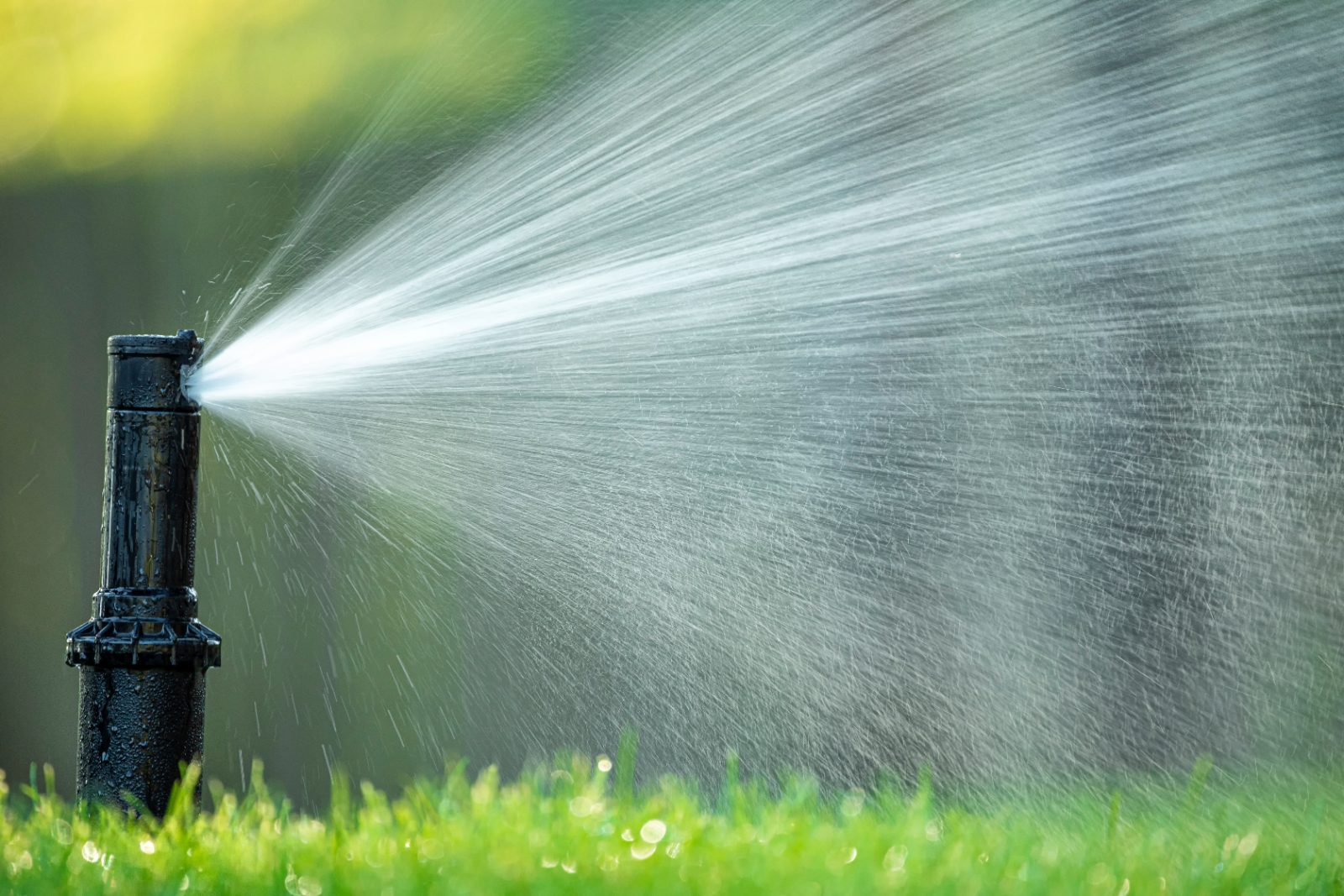
Irrigation in a freezing climate is a subscription business disguised as an installation business. The install happens once. The spring startup, the midseason repair, the backflow test and the fall blowout happen every year, for every customer, indefinitely. An East Tennessee irrigation company that markets only for new installs is paying to acquire customers it then forgets to bill twice a year, and leaving the recurring revenue to whoever calls them first.
How homeowners search for irrigation
Search splits three ways and each behaves differently. Install queries such as sprinkler system cost and irrigation installation near me are planned, desktop-heavy, and cluster in late winter and early spring alongside landscaping projects. Service queries are reactive and mobile: sprinkler head repair, irrigation leak, zone not working, usually typed while the homeowner is standing in a wet yard. Seasonal queries are pure calendar; sprinkler blowout near me spikes hard through late October and November, and sprinkler startup does the same in late March. Service and seasonal searchers decide in minutes and often call whichever company answers first. Install searchers gather three or four bids and take weeks.
What makes irrigation different
East Tennessee gets about 51.9 inches of rain a year, so irrigation here is a lawn-quality and convenience purchase rather than the necessity it is in the arid West. That permanently caps the install market and makes the service side proportionally more valuable. Install tickets scale with lot size and zone count; startups and blowouts are small, fast, high-margin visits whose profit depends entirely on how tightly they stack by route. The buyer is often the same person who hired the landscaper, and landscape companies are the main competitor alongside a long tail of one-truck operators. Utilities that require annual backflow testing create a third mandatory touchpoint every year. National lead-sellers show little interest in this trade, which keeps acquisition costs sane.
The seasonal pattern in East Tennessee
The calendar runs the business. With roughly 67 days a year at or below freezing, winterization is not optional here, and the whole model rests on two hard deadlines. Late March through May is startup and install season, and it is when freeze damage from a missed or sloppy blowout surfaces as billable repair: cracked backflow assemblies, split valves, broken heads. June through August is repair, controller and coverage work through humid heat. Late October into November is blowout season, compressed into roughly six weeks and the busiest stretch of the year by call volume. December through February is dead for field work, which makes it the right time to sell next spring's startup route rather than the time to stop marketing.
Where irrigation companies lose the job
- Treating blowout and startup as one-off transactions instead of enrolling customers into an automatic annual program, which leaves recurring revenue exposed to the first competitor who calls.
- No online booking for seasonal services, so a six-week blowout window gets rationed by how many calls one person can answer.
- Marketing installs only. The install audience is small, slow and expensive; the service audience is large, immediate and already nearby.
- Ignoring backflow testing as a lead source, when it is a recurring, deadline-driven reason to be in the customer's yard every single year.
What to measure
Cost per lead is close to useless here, because leads are not comparable; a blowout and a full install differ by more than an order of magnitude in value. Measure cost per acquired customer, then annual revenue per customer across startup, repair, blowout and midseason work, since a customer acquired once should produce billable visits for years. Watch program enrollment rate and year-over-year retention on the seasonal list, which predicts next spring's revenue better than any traffic report. Route density matters too: jobs completed per truck-day during blowout season is the ceiling on how much of the fall you can actually capture.
Questions irrigation owners ask
Is it worth advertising in the winter?
Yes, but for something different. Nobody buys a system in January, so stop bidding on install terms and spend the budget filling next season's schedule: early startup signups, annual program enrollment, and follow-up to every customer who skipped the blowout and is likely to have damage in March. Winter is when the spring route gets built. Going dark just means restarting from zero in April.
How do we stop losing customers to landscapers?
By owning the two annual dates. A mowing crew in the yard every week has far more contact than you do and will pick up the irrigation work by default. The counter is a scheduled, automatic relationship: a confirmed startup date, a confirmed blowout date, and a technician the homeowner recognizes. Contact frequency decides who gets the repair call, not who installed the system.
Should we sell smart controllers?
They are a good service hook and a mediocre standalone product. Hardware margin is thin and homeowners can buy the same controller online. The value is in installation, zone programming and the seasonal adjustments most owners never make, plus the fault visibility a connected controller gives your office. Sell it as part of a service relationship rather than as a boxed product with a price tag.
If the seasonal build-out is more than your team can run in-house, see our irrigation marketing page.