

Why Lenoir City Water Damage Restoration Companies Are Invisible When Panicked Homeowners Ask AI Who to Call
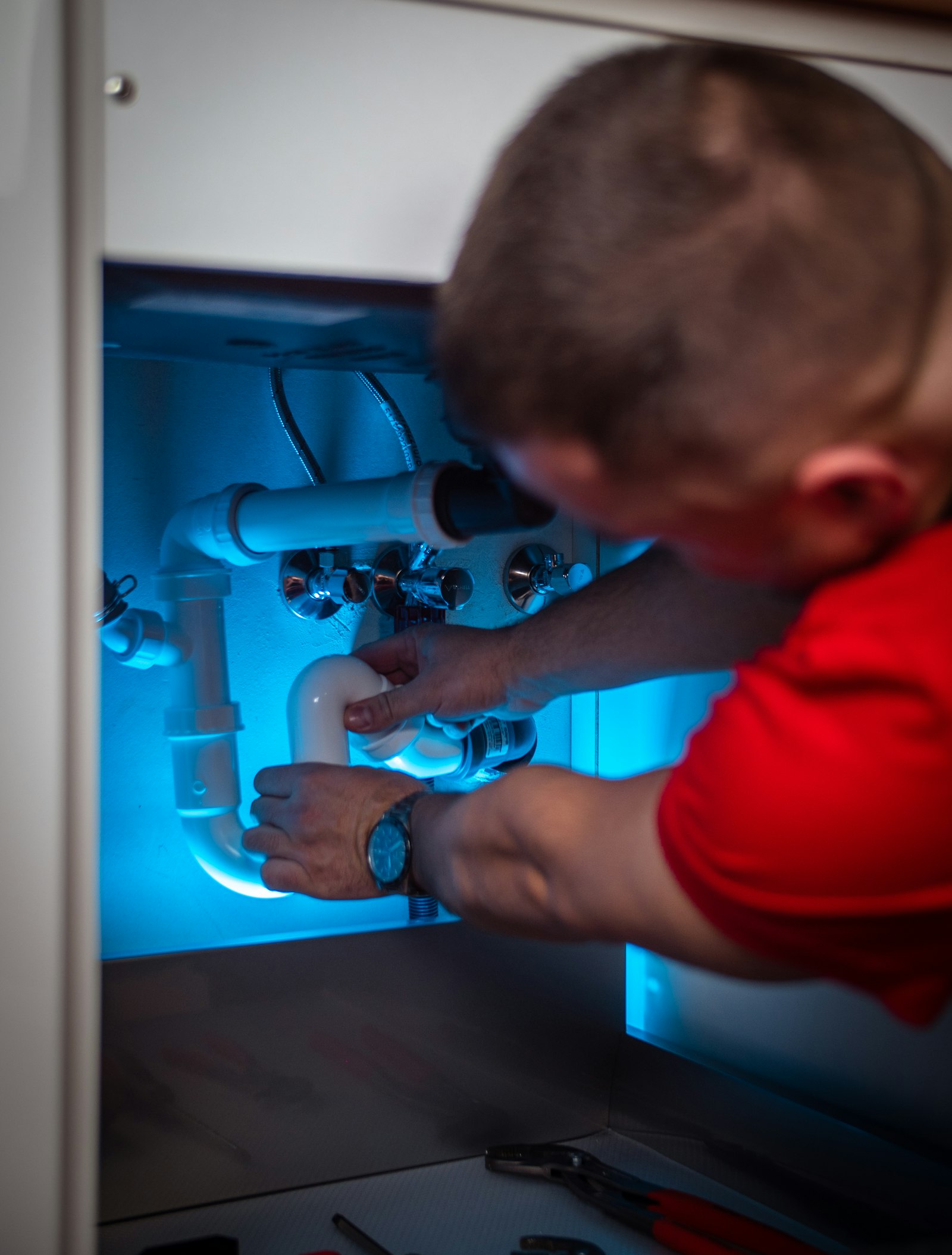
It is 2:14 a.m. in Lenoir City. A supply line behind a washing machine lets go, and by the time a homeowner wakes up there is an inch of water creeping toward the hardwood. They are not going to open Google and calmly scroll ten blue links. They grab the phone on the nightstand and say, “Who do I call for water damage near me right now?” — or they type that exact panic into ChatGPT. Whatever name the machine says first is the company that gets the call, the insurance job, and the five-figure ticket.
If an AI assistant can’t name your restoration company in that moment, you are invisible for the highest-intent, highest-margin call you’ll get all week — no matter how good your trucks, your crew, or your Google Ads are. Water damage restoration lives or dies on being the answer, not an option. And the layer that decides “the answer” has quietly moved from the search results page to the AI models sitting on top of it.
The emergency call moved upstream — and most restoration companies never noticed
For fifteen years, winning local search meant ranking in Google’s map pack and stacking reviews. That still matters. But a new layer now sits above the results a homeowner used to scroll. Google’s AI Overviews, which rolled out to U.S. searches in May 2024, answer the question directly at the top of the page and name a short list of businesses — often before anyone scrolls to your listing. At the same time, OpenAI reported more than 300 million weekly active ChatGPT users at the end of 2024, and a growing share of them treat it as a search engine, asking it to recommend a local contractor outright.
The result is a search world where the click is optional. SparkToro’s 2024 clickstream analysis, led by Rand Fishkin, found that roughly 58% of U.S. Google searches ended without any click to an outside website — the answer was consumed on the results page itself. For a restoration company, that means the moment of decision increasingly happens inside an answer engine you don’t control, in a conversation you never see. You are either the name it surfaces or you are nowhere.
Why restoration is uniquely exposed to AI search
Not every trade is equally vulnerable to this shift. A homeowner planning a kitchen remodel has weeks to compare bids. A homeowner standing in two inches of water has minutes. Restoration is the most emergency-driven, lowest-deliberation category in home services, which makes it the most likely to be decided by whoever the assistant names first.
Three things compound that exposure. First, intent is absolute — nobody searches “water damage company” for fun, so every AI answer is attached to a real, ready-to-buy job. Second, the tickets are large and insurance-backed, so a single missed answer isn’t a $150 service call, it’s often a $5,000–$25,000 mitigation and rebuild. Third, most restoration owners have spent zero time optimizing for how machines read their business, because the category has always run on Local Service Ads and referral relationships. That gap is exactly where a sharper competitor gets cited in your place.
How AI engines actually decide who to name
Language models don’t “rank” the way the old algorithm did. They assemble an answer from patterns of corroborated information across the web, then pick the entities that are most clearly, consistently, and credibly associated with the question being asked. In practice, four things drive whether your company gets named for “water damage restoration in Lenoir City.”
Entity clarity. The model has to understand that a specific business named X exists, does water damage restoration, and serves Lenoir City and the surrounding Loudon County area. That understanding is built from your Google Business Profile, your website, and structured data — specifically LocalBusiness and Service schema markup that spells out, in machine-readable terms, exactly what you do and where.
Consistency. Google’s own quality framework, E-E-A-T — Experience, Expertise, Authoritativeness, and Trust — rewards businesses whose name, address, and phone number (your NAP) match everywhere they appear. When your details are identical across your GBP, website, and directory citations, the machine reads you as one trustworthy entity. When they conflict, it reads you as noise and routes the answer to a cleaner competitor.
Corroboration. Models trust what many independent sources say about you, not what you say about yourself. Reviews, local directory listings, press mentions, and third-party pages that describe your restoration work all feed the model’s confidence. According to BrightLocal’s Local Consumer Review Survey, the overwhelming majority of consumers read online reviews before choosing a local business — and those same reviews are training data the AI reads too.
Fresh, question-shaped content. When your site directly answers the questions homeowners ask — “what to do first when your basement floods,” “does insurance cover water damage in Tennessee,” “how fast can water damage be dried out” — you give the model clean passages to quote and cite. Pages built as genuine answers get pulled into AI responses; pages built as brochures get skipped.
The Lenoir City AI visibility checklist
You can’t buy your way to the top of an AI answer, but you can engineer the signals that put you there. Here is the order that actually moves the needle for a restoration company in East Tennessee.
Start with a fully built Google Business Profile: correct primary category (Water Damage Restoration Service), every service listed, real photos of your crew and equipment, and service areas that include Lenoir City, Loudon, Farragut, and the west-Knoxville corridor. Lock your NAP so it is byte-for-byte identical on your site, your GBP, and every directory. Add LocalBusiness and Service schema to your website so machines can read your offer without guessing. Build a review engine that asks every insurance-approved customer for a Google review within 24 hours of the job closing, because velocity and recency matter as much as total count. Then publish answer-shaped content — one clear page per real homeowner question — and earn a handful of credible local citations and mentions that corroborate you exist and do this work. Do those things and you stop hoping the machine knows you and start giving it no reason not to.
Test whether the machine already knows you
Don’t guess — measure. Open ChatGPT and Google’s AI mode and ask the questions a panicked homeowner would: “best water damage restoration company in Lenoir City, TN,” “who do I call for a flooded basement near Lenoir City,” “emergency water removal Loudon County.” Write down which companies get named. If it isn’t you, that is not a branding problem or an ad-budget problem — it is a visibility problem with a fixable cause. The competitors getting cited aren’t necessarily better at drying out a house. They are just legible to the machine, and you aren’t yet.
Frequently asked questions
What is AI search visibility for a water damage restoration company?
AI search visibility is whether AI tools like ChatGPT, Google’s AI Overviews, and voice assistants name your company when someone asks for a local restoration contractor. It’s distinct from traditional SEO: instead of ranking a page, you’re making your business the entity the model trusts enough to recommend by name inside a direct answer.
Does my Google Business Profile still matter if people use AI?
More than ever. Your Google Business Profile is one of the primary sources AI systems read to understand what you do, where you serve, and how well-reviewed you are. A complete, consistent, actively reviewed profile is the single strongest foundation for getting cited in both the map pack and AI answers — they draw from overlapping signals.
How fast can a restoration company start showing up in AI answers?
Foundational fixes — cleaning up your NAP, completing your profile, adding schema — can be reflected within a few weeks as engines recrawl your information. Building the review velocity, content, and third-party corroboration that make you a consistent named answer typically takes two to four months of steady work. There is no overnight switch, but there is a compounding one.
Will AI Overviews replace my website?
No — but they change its job. Your website becomes the source AI cites rather than only the page a human lands on. That means it has to be structured, factual, and answer-shaped so machines can quote it, and it still has to convert the homeowners who do click through with clear calls to action and a fast path to your emergency line.
How many Google reviews do I need to get recommended by AI?
There’s no fixed threshold, and chasing a magic number misses the point. What AI systems weigh is the pattern: a healthy volume of recent, detailed, genuine reviews that mention the specific service and location. A restoration company with 80 recent, keyword-rich reviews often reads as more credible than one with 300 stale ones. Consistency and recency beat raw count.
Stop losing the 2 a.m. call to a competitor the machine likes better
The restoration companies that win the next five years in Lenoir City won’t be the ones with the biggest ad budget — they’ll be the ones AI trusts enough to name first when a homeowner is standing in water and out of patience. That’s an engineering problem with a clear playbook, and it rewards whoever moves first while competitors are still buying clicks. Forty-Second Street builds AI search visibility systems for East Tennessee home-services contractors: the profile, the schema, the reviews engine, and the content that makes the machine say your name.
Keep reading
See where you stand: get a free AI visibility audit and find out whether local homeowners can find you in Google and AI search.

