Why Knoxville Tree Service Companies Lose Storm-Cleanup Calls to the Map Pack (and the Google Business Profile Playbook That Books Them)
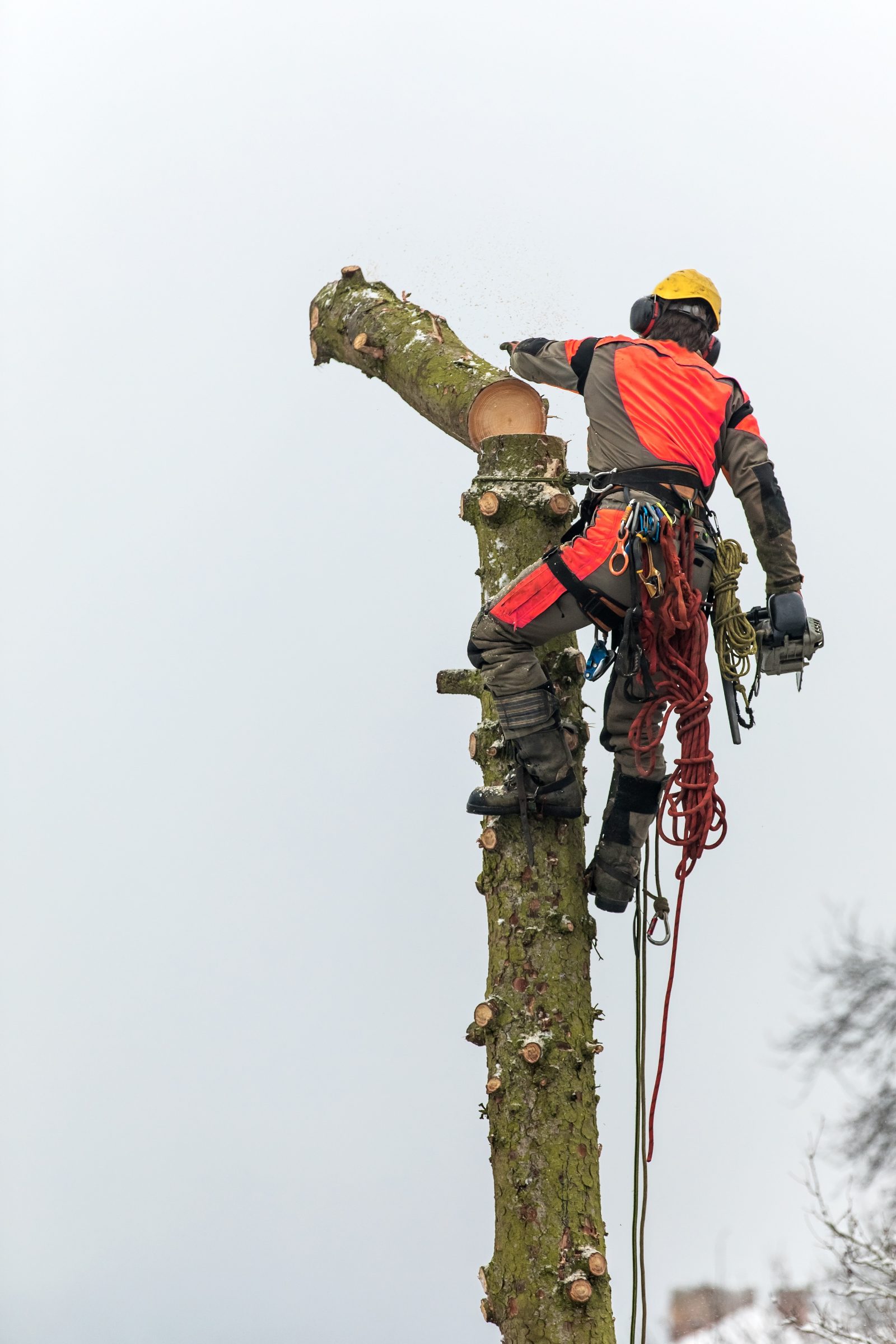
A line of thunderstorms rolls over Sharp’s Ridge at 2 a.m. By 6:30, a homeowner in Fountain City is staring at half a white oak lying across her driveway and the neighbor’s fence. She does not open the Yellow Pages. She types “emergency tree removal near me” into her phone, sees three companies in the Google map pack, and calls the one with the most reviews and the word “open” next to it. Your crew has the crane, the ISA Certified Arborist, and the insurance certificate. You were fourth on the list. You never got the call.
Knoxville tree service companies lose storm-cleanup calls because the Google map pack, not the website, decides who gets phoned first, and the map pack is ranked almost entirely on how complete, active, and reviewed a Google Business Profile is. Fix the profile before storm season, feed it reviews and photos every week, and answer the phone in under five minutes, and you will be the company that gets called while the tree is still on the driveway.
Why the map pack decides who gets the storm call
Storm work is the highest-margin, lowest-patience job in the tree business. The homeowner is stressed, the insurance adjuster wants a photo and an invoice, and the first credible company to answer wins. Google knows this behavior better than anyone, which is why local-intent searches like “tree removal Knoxville” or “tree service near me” show a three-listing map pack above every organic result. On a phone, that map pack fills the entire first screen.
Whitespark’s annual Local Search Ranking Factors survey, the industry’s longest-running expert consensus on how the map pack works, puts Google Business Profile signals at roughly a third of what decides those three spots, with review signals the next-largest factor. Your website, your backlinks, and your Facebook page all matter less than the profile most Knoxville tree companies set up once in 2019 and never touched again.
The three things Google actually scores
Google’s own documentation says local results are ranked on relevance, distance, and prominence. Relevance is whether your profile clearly says you do the thing being searched. Distance is how close your listed location or service area is to the searcher. Prominence is how well-known and well-reviewed you are, online and offline. You cannot move your shop closer to every neighborhood in Knox County, but you can control the other two almost completely, and most of your competitors are not doing it.
Step 1: Fix the profile before the storm hits
Start with categories. Your primary category should be “Tree service.” Add “Arborist and tree surgeon” as a secondary if you employ one, and add “Landscaper” only if you actually want landscaping calls, because category choices shape which searches you appear in. Then fill the Services section with every specific job you take: emergency tree removal, storm damage cleanup, crane removal, stump grinding, tree trimming, cabling and bracing, lot clearing, and ash tree removal. That last one matters in Knox County, where the emerald ash borer has been killing ash trees for over a decade and homeowners search for it by name.
Set your hours honestly and use the “24 hours” option only if a human will actually answer at 2 a.m. Google can and does flag profiles whose stated hours do not match real behavior. Write a business description that names the areas you serve, such as West Knoxville, Farragut, Powell, Halls, Seymour, and Maryville, and states your credentials in plain language: ISA Certified Arborist on staff, TCIA member, fully insured with workers’ compensation. Homeowners and insurance adjusters both read that paragraph.
Step 2: Photos that prove you do the work
A tree service profile with a logo and two truck photos looks like a hobby. A profile with a bucket truck on a Sequoyah Hills street, a crane lifting a poplar section over a roof in Bearden, a before-and-after of a Halls backyard, and a crew in hard hats and chaps looks like the company you call when a tree is on your house. Photos are a prominence signal, they raise the click-through rate on your listing, and they answer the homeowner’s real question, which is whether you can handle a job this big without wrecking the rest of the property.
Make it a rule: every crew lead uploads one job photo per day from the Google Business app. Wide shot, tight shot, finished shot. Over a season that is 200 fresh, geotagged photos, which is more than most Knoxville competitors will post in five years.
Step 3: Reviews with keywords and a 24-hour ask
Reviews are the second-largest ranking factor and the largest conversion factor. BrightLocal’s Local Consumer Review Survey consistently finds that roughly three in four consumers read reviews regularly when choosing a local business, and Harvard Business School economist Michael Luca showed that a one-star increase in an independent business’s rating produces a 5 to 9 percent revenue lift. In tree work, where the average ticket runs into four figures, that gap is real money.
The system is simple. The moment the crew finishes and the yard is raked, the crew lead texts the homeowner a direct review link from their phone. Not tomorrow, not at invoicing. Within the hour, while the relief is fresh. Ask them to mention what you did and where: “removed a storm-damaged oak in Fountain City.” Those words in review text help Google connect your profile to those exact searches. Then reply to every review within a day, thanking them and naming the service again. Google explicitly says responding to reviews is a ranking and trust signal.
Step 4: Google Posts and Q&A as storm-season inventory
Most tree companies never touch the Posts feature. That is a mistake in a market where demand spikes overnight. When a storm comes through, publish a Post within the hour: “Taking storm damage calls across Knox County today. Crane available. Call for same-day assessment.” It appears directly on your profile and signals to both Google and the homeowner that you are active right now. Off-season, post weekly about seasonal topics: winter pruning, spring inspections for cracked limbs, summer ash borer signs.
Seed the Q&A section yourself with the questions you get on every call: Are you insured? Do you work with insurance adjusters? Do you remove the stump? Can you get a crane into a tight backyard? Answer each one clearly. If you do not, a competitor or a stranger will answer for you.
Step 5: Answer in five minutes or lose the job
A perfect profile still loses if the call goes to voicemail. The Lead Response Management study led by James Oldroyd, then at MIT, found that the odds of qualifying a lead fall by roughly 21 times when a business waits 30 minutes to respond instead of five. Storm callers are even less patient. If your crew is up a tree and the office line rings out, that homeowner is dialing the next listing before you climb down.
Fix it with three moves. Turn on messaging in your Google Business Profile so texters get a reply. Route your listed number through a call-tracking line that rings the office, then the owner, then an answering service, in sequence. And add a missed-call text-back so anyone who hangs up gets an immediate message: “Sorry we missed you, we are on a storm job. Reply with your address and we will call back within 10 minutes.” That single automation recovers jobs you never knew you lost.
What to measure so you know it is working
Your Google Business Profile performance dashboard shows calls, direction requests, and the search terms that surfaced your listing. Screenshot it the day you start and compare 30 days later. Category searches such as “tree removal” should climb first, then calls. If calls rise and booked jobs do not, the problem has moved to your phone handling, not your profile.
Frequently asked questions
How long does it take for a tree service to rank in the Knoxville map pack?
Most Knoxville tree service companies see measurable movement in the map pack within 30 to 60 days of completing their Google Business Profile, adding weekly photos, and building a steady flow of new reviews. Highly competitive searches like “tree removal Knoxville” can take three to six months to crack, while neighborhood-level searches such as “tree service Fountain City” often move within weeks.
Does a tree service need a physical address to show up on Google Maps?
No. A tree service that works from a home or an equipment yard can hide its address and list a service area instead. Google will still show the business in the map pack for searches inside that service area. The key is to define the service area by the ZIP codes or cities you actually cover rather than a wide radius, because an overbroad service area weakens relevance for the neighborhoods you most want to win.
Which Google Business Profile category should a Knoxville tree company use?
Use “Tree service” as the primary category. Add “Arborist and tree surgeon” as a secondary category if you have an ISA Certified Arborist on staff, and add “Landscaper” only if you actively want landscaping work. Categories determine which searches your profile can appear in, so choose the ones that match the jobs you want, not every job you could technically do.
How many Google reviews does a tree service need to compete in Knoxville?
There is no fixed number, because the target is relative to the three companies currently in the map pack for your searches. Look at their review counts and ratings, then build a review system that adds new reviews every week. A tree service that gains four to eight new reviews a month with specific job and neighborhood details usually overtakes competitors with larger but stale review counts within a season.
Should a tree service respond to negative Google reviews?
Yes, every time, within 24 hours. Respond calmly, acknowledge the issue, state what you did or will do to resolve it, and invite the customer to contact you directly. Homeowners reading reviews judge how you handle problems more than whether problems exist, and Google treats owner responses as a signal of an active, trustworthy business.
Storm season in East Tennessee does not send a calendar invite. The companies that book the cleanup work are the ones whose Google Business Profile was ready before the wind picked up, and whose phone was answered when it rang. If yours is not there yet, we can build it with you.
Keep reading
See where you stand: get a free AI visibility audit and find out whether local homeowners can find you in Google and AI search.
NiceJob: Ask for a tree service review within 24 hours of each storm job.
Answering Service Care: Have live people answer storm calls day and night when your crew is out.