

Why Sevierville Landscapers Vanish From Google Every Off-Season (and the Local SEO System That Books Spring Work in January)
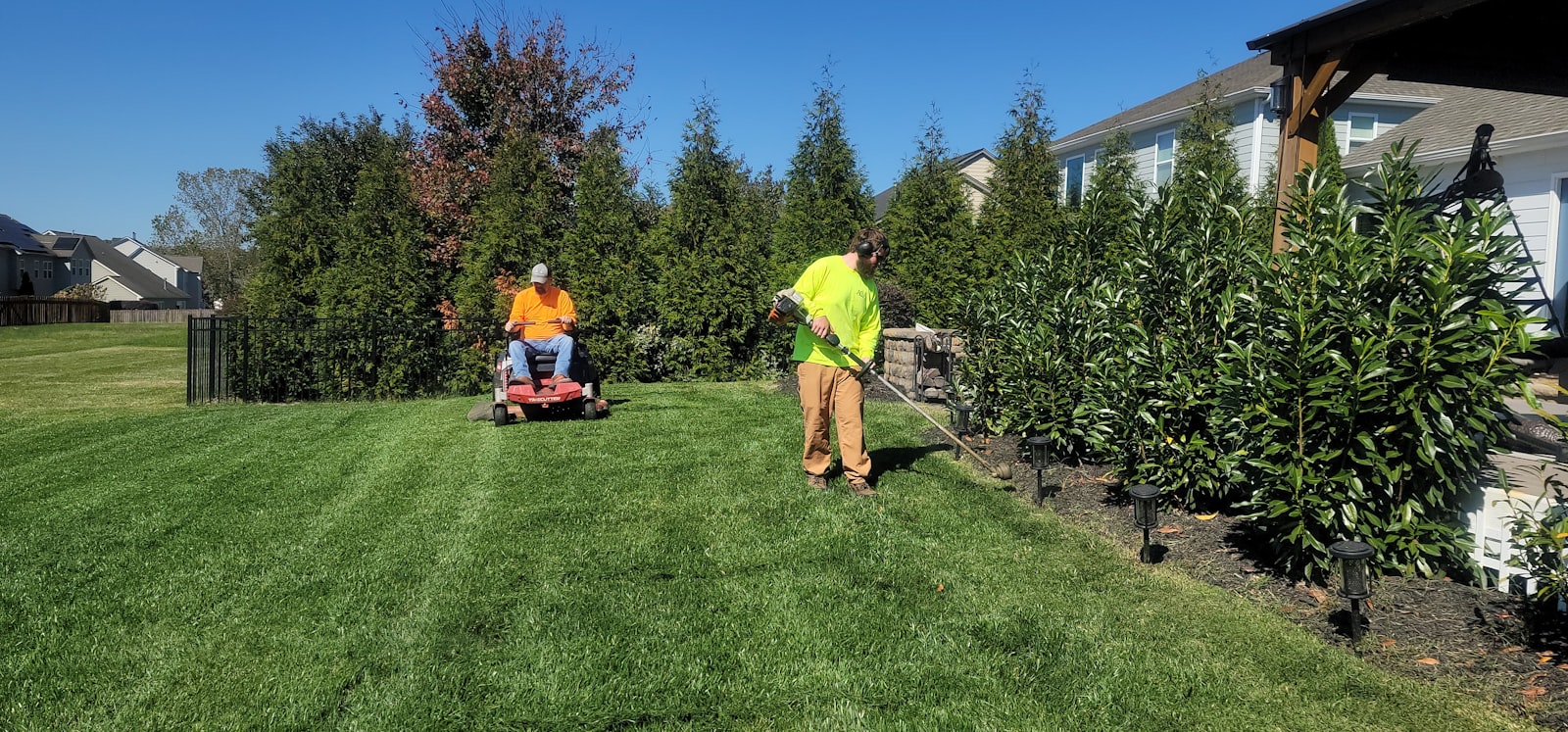
It happens the same way every year in Sevierville. The last leaves come off the trees in November, the mowing contracts wind down, the crew scatters to side jobs, and the phone goes quiet. By February you’re staring at an empty schedule for spring, wondering why the homeowners who searched “landscaping near me” all week ended up with the company three miles up Chapman Highway instead of you. You didn’t get worse at landscaping. You just disappeared from Google at the exact moment the smart companies were quietly loading their spring calendar.
Here’s the direct answer: your rankings don’t collapse because winter is slow — they collapse because you stop feeding Google signals in the off-season, and Google rewards the businesses that stay consistently active. The landscapers who book out their spring in January treat the slow months as their most important Local SEO season, not their vacation from it. Below is the exact system to do that in Sevierville and across East Tennessee.
Why your rankings quietly fall apart between November and March
Google’s local search isn’t a scoreboard that freezes when you stop playing. It’s a living ranking that constantly re-weighs who deserves to sit in the three spots of the map pack — the little block of businesses with the map and the reviews that shows up above the regular blue links. When you go dark for four months, three things happen at once. Your review velocity drops to zero while a competitor keeps collecting fresh ones. Your Google Business Profile stops getting new photos, posts, and updated service info, so it reads as stale. And your website stops publishing anything new, which tells Google’s crawler there’s nothing here worth re-checking.
None of those are dramatic on their own. Stacked over a winter, they’re the difference between showing up first when a Sevierville homeowner finally searches “spring cleanup” in March and showing up on page two, where roughly nobody scrolls. The company that wins isn’t louder in spring. It never went quiet in the first place.
How Google actually ranks a Sevierville landscaper
Strip away the noise and Google is public about how local results are ordered. In its own guidance on improving your local ranking, Google names three factors: relevance, distance, and prominence. Relevance is how well your profile and site match what the searcher typed. Distance is how close you are to the person or the area they searched. Prominence is how well-known and trusted you appear — driven heavily by the volume, recency, and quality of your reviews, plus the consistency of your business information across the web.
You can’t move your shop closer to every neighborhood in Blount and Sevier County, so distance is mostly fixed. But relevance and prominence are things you build, and they’re exactly the two you abandon when you close up for winter. That’s the whole game: the off-season is when relevance and prominence are cheapest to build, because your competitors have stopped competing for them.
The off-season Local SEO system that books spring work
This is the part most landscapers skip, and it’s the part that fills the calendar. Run this as a repeatable winter routine, not a one-time cleanup.
Keep your Google Business Profile alive. Post something to your profile every week or two — a before-and-after from last season’s retaining wall, a note that you’re booking spring cleanups now, a photo of the crew. Make sure your categories are set correctly (primary category “Landscaper,” plus secondary categories for what you actually do: lawn care, hardscaping, irrigation), your service area lists the East TN towns you cover, and your hours reflect winter reality. A profile that keeps moving reads as an active business; a frozen one reads as a company that might be out of business.
Manufacture review velocity while you still have last season’s customers fresh in mind. Prominence rewards recency, so a review from December counts more than one from last June. Text every fall customer a direct link to your Google review form. James Clear’s work on habits in Atomic Habits applies here: make the ask frictionless and tie it to a cue — every completed job triggers a same-day review request. Ten fresh reviews over a slow winter can outrank a competitor who collected forty two summers ago and none since.
Fix your NAP consistency everywhere it appears. Your Name, Address, and Phone number need to match exactly across your website, Google, Yelp, Facebook, Angi, and every local directory. Mismatches — an old phone number, “Rd” on one site and “Road” on another — erode the prominence signal because Google can’t confidently tell it’s all the same business. Winter is the perfect time to audit and clean this up.
Publish location-specific content the crawler can find. A landscaper with a single generic “Services” page is invisible for most of what people actually search. Build pages that match real queries: “spring lawn cleanup in Sevierville,” “retaining walls in Pigeon Forge,” “irrigation installation in Gatlinburg.” Each page raises relevance for that specific search and that specific town. You have time to write these in January; you won’t in April.
The content play that compounds while you’re not mowing
Off-season is writing season. The blog posts and service pages you publish now are the ones ranking by the time demand returns, because content takes weeks to months to earn its position. Answer the questions Sevierville homeowners actually type: when to schedule spring cleanup in East Tennessee, what mulch survives our clay soil, how to fix winter lawn damage, whether to aerate before or after the last frost. This isn’t busywork — it’s the relevance factor doing its job, and it increasingly matters for AI search too, where tools like ChatGPT and Google’s AI Overviews pull from clearly written, well-structured pages when a homeowner asks the machine who to call.
There’s a positioning payoff underneath all of this. Marty Neumeier’s core idea in Zag is that the winning brand is the one that’s radically clear about what it is. A landscaper whose profile, reviews, and pages all consistently say “Sevierville hardscaping and lawn care” doesn’t just rank better — it becomes the obvious choice in the searcher’s mind. Consistency is a ranking signal and a branding signal at the same time.
What to measure so you know it’s working
Don’t guess. Watch three numbers through the winter. First, your Google Business Profile insights — calls, direction requests, and website clicks — which should hold steadier than your revenue does. Second, your ranking for your money keywords (“landscaping Sevierville,” “lawn care near me”) checked from a local vantage point, not from wherever you happen to be. Third, review count and average rating, tracked month over month. If those three are climbing while it’s cold, your spring is already being booked whether the phone shows it yet or not.
Frequently asked questions
How long does Local SEO take to work for a landscaping company?
Plan on a few weeks for Google Business Profile changes to show up and two to four months for new website content to climb into competitive positions. That lag is exactly why the off-season is the right time to do the work — you’re building in January so you rank in March when Sevierville homeowners start searching for spring cleanup.
Do I really need a website if I have a Google Business Profile?
Yes. Your profile drives the map pack, but Google cross-checks your website to confirm relevance and trust, and your service pages are what rank in the regular results and get pulled into AI answers. A strong profile and a thin or missing website is a common reason a landscaper stalls just outside the top three.
How do I get more Google reviews without being pushy?
Make it a system, not a favor. Send every customer a direct link to your review form the same day you finish the job, keep the message short and friendly, and let the quality of the work do the persuading. Recency matters to Google, so a steady trickle of fresh reviews through the off-season beats a big burst once a year.
What’s the difference between the map pack and regular search results?
The map pack is the boxed set of three local businesses with a map, ratings, and a call button that sits near the top of a local search. The regular results are the blue links below it. They’re ranked by overlapping but different signals, so you want to earn a spot in both — the profile work targets the map pack, the content work targets the links.
Will AI search like ChatGPT change how homeowners find landscapers?
It already is. When someone asks an AI tool for a landscaper in Sevierville, it leans on clear, well-structured, consistent information about your business — the same signals that help you in Google. Getting your profile, reviews, and pages in order is how you stay findable whether the homeowner uses a search bar or asks a chatbot.
The landscapers who own spring in East Tennessee don’t out-hustle everyone in April — they out-prepare everyone in January, while the competition is waiting for the weather to turn. If your off-season plan is to hope the phone rings again, that’s not a plan, and it’s the reason the same two or three companies take the calls every year. Build the system now and let it work while you rest.
Keep reading
See where you stand: get a free AI visibility audit and find out whether local homeowners can find you in Google and AI search.

